Cold feet are one of those small discomforts that quietly ruin a good day. You layer up, you find your warmest coat, and then somewhere between the front door and the car your toes have gone numb anyway. If you've tried thick cotton socks or a budget wool blend and still ended up cold by mid-morning, alpaca wool socks are worth understanding properly before you write off wool altogether.
Alpaca wool has become increasingly popular in cold-weather hosiery. This guide separates useful fibre information from exaggerated marketing claims. It covers what alpaca fibre is, what research suggests about warmth and comfort, how it compares with merino wool, how to buy well, how to care for alpaca socks and the mistakes worth avoiding — with Australian winters and everyday wear in mind.
Why Alpaca Wool Socks Matter This Winter
Australian winters vary considerably. Mild coastal conditions can contrast with much colder mornings across inland areas, Tasmania, Victoria, alpine regions and elevated parts of New South Wales and Queensland. Warm socks can therefore be genuinely useful for commuting, outdoor work, travel and cold homes without central heating.
Fibre choice is only part of the picture. Cotton can feel comfortable in mild conditions, while wool and purpose-designed performance fibres may manage moisture differently during prolonged cold-weather activity. Alpaca wool sits in a different category: a natural animal fibre developed by alpacas living in cold, high-altitude Andean conditions. How that raw fibre performs in a finished sock still depends on yarn, blend, knit density, thickness and fit.
What Is Alpaca Wool, Exactly?
Alpaca wool comes from the fleece of alpacas, camelids native to the high-altitude regions of the Andes in Peru, Bolivia and Chile. Australia has built a significant alpaca industry since the first animals were imported in 1988, with Australian breeders recognised internationally for fleece quality according to the Australian Alpaca Association.
There are two alpaca breeds used for fibre: Huacaya, which produces a dense, crimped fleece commonly used in socks, and Suri, which produces long, lustrous fibres more often used in woven textiles.
Many alpaca fibres contain a medulla, or partially hollow central structure, though the degree of medullation varies by fibre diameter and fleece quality. Where present, this structure can trap air and may contribute to alpaca wool's reputation for warmth without excessive bulk.
Alpaca fibre is naturally lanolin-free. It can also have a smoother surface than coarser sheep's wool, which is one reason finer grades may feel soft against the skin. Lanolin-free does not mean universally hypoallergenic, and individual reactions can still occur to fibres, dyes, finishes, detergents or other blend components.

Are Alpaca Socks Really Warmer Than Wool? What the Evidence Shows
You will often see claims that alpaca is “three times warmer than wool”, but this figure is not supported by verifiable peer-reviewed research for finished socks, so Uniq Socks does not use it as a product claim.
A comparative study published in Veterinarski Arhiv by researchers at the University of Zagreb measured fleece insulation on a small sample of Huacaya alpacas and Merino sheep using calorimetric testing and infrared thermography (Soroko et al., 2019). Separately, Australian research into alpaca fleece structure found that insulation depends on several physical characteristics together, including fibre diameter and medullation, and that finer fibre did not automatically provide superior insulation under all conditions (Moore, Blache & Maloney, 2011).
Both studies concern raw fleece rather than finished socks. A sock's warmth depends on the complete product: fibre grade, blend ratio, yarn, knit density, thickness and fit. The research supports treating alpaca as a fibre with genuine insulation characteristics without converting that into a fixed warmth percentage for every pair.
Alpaca vs Merino Wool Socks: A Fair Comparison
| Feature | Alpaca Wool | Merino Wool |
|---|---|---|
| Warmth | Often valued for warmth without excessive bulk; actual performance depends on fibre grade, blend, yarn, knit density, thickness and fit | Strong thermal regulation; actual performance also depends on fibre grade, construction, thickness and fit |
| Softness | Can feel very soft in fine textile grades | Soft, especially in fine and superfine grades |
| Lanolin | Naturally lanolin-free | Lanolin is present in raw sheep's wool and substantially removed during conventional textile processing |
| Elasticity | Lower on its own; often blended with wool or supporting fibres for shape retention | Higher natural elasticity and stretch recovery |
| Best suited to | Cold-weather comfort where warmth and softness are priorities | Versatile cold-weather and active use, depending on the finished sock |
These are general fibre characteristics rather than guaranteed performance differences between every finished alpaca and merino sock.

Neither fibre is objectively better in isolation. Blending alpaca with wool and small amounts of supporting fibres can combine warmth and softness with improved stretch, recovery and durability. Exact fibre percentages vary by Uniq Socks style, so check the individual product page.
Is Alpaca Wool Good for Sensitive Skin?
If you've avoided wool because of itch, it helps to distinguish fibre prickle from allergy. A review published in Acta Dermato-Venereologica found that current evidence does not support wool fibre itself as a general skin allergen; irritation is often associated with coarse fibres mechanically stimulating the skin (Fisher & Wong).
Alpaca is naturally lanolin-free and fine textile grades may feel comfortable to some people, but that is not the same as being hypoallergenic. Anyone with a diagnosed allergy, eczema or significant skin sensitivity should assess their own tolerance and seek professional advice where appropriate.
The Buying Guide: How to Choose Good Alpaca Wool Socks in Australia
1. Check the full fibre composition.
Do not judge quality from the word “alpaca” or one percentage alone. Warmth and comfort also depend on supporting fibres, yarn, knit density, thickness and fit.
2. Match the weight to how you'll wear them.
A thicker, denser knit can suit boots and colder outdoor conditions, while a lighter blend may work better inside dress shoes or for everyday indoor-outdoor wear.
3. Consider cuff comfort.
A cuff should feel secure without excessive constriction. People with diabetes, circulation problems or other medical foot concerns should follow advice from their GP, podiatrist or other qualified health professional rather than relying on general sock guidance.
4. Look for product-specific certification.
Certification should be tied to the exact product or verified range. Where stated on an Uniq Socks product page, OEKO-TEX® Standard 100 means the tested textile has been assessed for harmful substances against the standard’s criteria. It is not an organic or general sustainability certification.
5. Get your sizing right.
Check the sock size guide and the product-specific fit information before buying.
Comparison: Alpaca Wool vs Bamboo vs Cotton Socks
Uniq Socks' range spans several materials suited to different wardrobes:
- Bamboo-derived viscose is often selected for a smooth, lightweight feel; performance depends on the complete blend and knit.
- Premium cotton provides familiar softness and versatility for everyday wear.
- Alpaca wool blends provide warmth and a soft hand-feel for cooler conditions.
Choosing between them is less about finding one universally superior fibre and more about matching the product to the season, footwear and wearer.
Common Mistakes to Avoid
- Buying on fibre name alone. Review the full composition and construction.
- Ignoring the care label. Animal-fibre blends can be sensitive to heat and agitation, but exact care requirements vary by product.
- Assuming thicker always means warmer. Yarn, knit density and fibre blend matter alongside thickness.
- Ignoring fit. A poorly fitting sock can bunch, slip or feel restrictive regardless of fibre quality.
Expert Recommendations
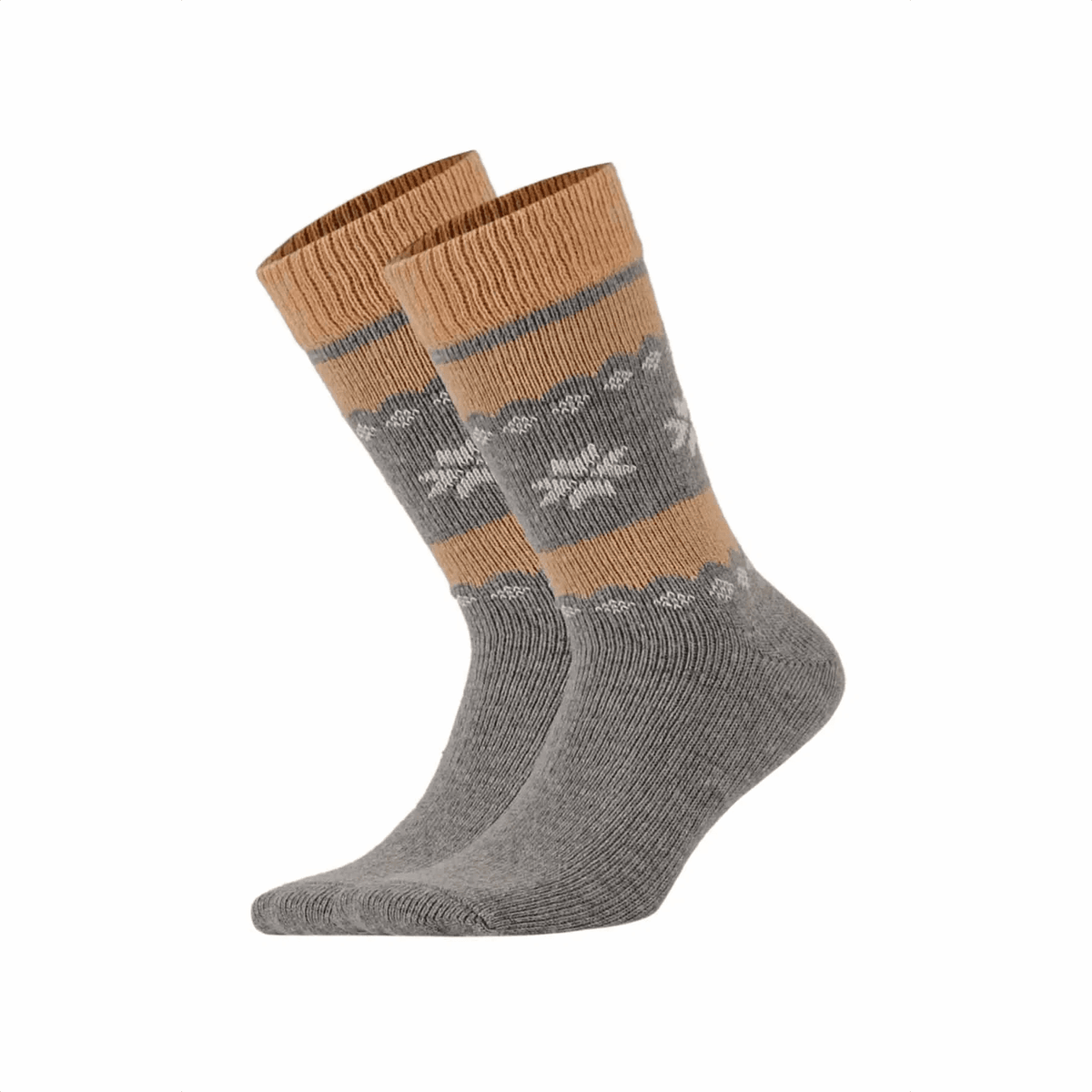
For everyday Australian winter wear, a well-constructed alpaca-wool blend can offer a practical balance of warmth, softness and shape retention. Uniq Socks offers different styles for different wardrobes, including the Alpaca Wool Geometric Knit Socks, Alpaca Wool Striped Winter Socks and Alpaca Wool Plain Coloured Winter Socks. Check each page for the exact fibre blend.
Are Alpaca Wool Socks Sustainable?
Sustainability is broader than the fibre name. Animal husbandry, land use, fibre processing, dyeing, manufacturing, transport, durability and care all contribute to the impact of a finished sock.
Third-party certification can support specific claims, but each standard covers defined criteria. For Uniq Socks alpaca wool products, only certifications stated on the relevant product page should be relied upon. Where OEKO-TEX® Standard 100 is stated, it confirms testing of the textile for harmful substances against the standard’s criteria; it does not certify organic status or the overall environmental impact of the product.
Gifting Alpaca Wool Socks
Alpaca wool socks can make a thoughtful winter gift because they combine practical warmth with premium texture and design. If you are unsure which style to choose, explore the gift collection alongside the individual alpaca product pages.
How to Care for Alpaca Wool Socks
Follow the care label on the exact pair. In general, animal-fibre socks benefit from avoiding unapproved high heat, aggressive rubbing and wringing, but product-specific instructions take priority over any universal method. For broader guidance, see the designer sock care guide.
Frequently Asked Questions
Are alpaca socks warmer than wool socks?
Alpaca has a genuine insulation reputation, but no reliable evidence supports a fixed statement that every alpaca sock is a particular percentage warmer than every merino sock. Finished-sock warmth depends on blend, yarn, knit density, thickness and fit.
Are alpaca socks itchy?
Fine alpaca textile fibres can feel smooth and are naturally lanolin-free, but individual skin sensitivity varies and no fibre is universally irritation-free.
How do you wash alpaca wool socks?
Follow the individual care label for the exact blend and construction.
Do alpaca socks shrink?
Animal-fibre textiles can change shape when exposed to unsuitable heat or agitation. The safest approach is to follow the product care instructions.
Are alpaca socks suitable for people with diabetes or poor circulation?
Alpaca fibre does not make a sock medically suitable for diabetes or circulation conditions. People with these concerns should follow advice from an appropriate health professional.
How much alpaca fibre should a good sock contain?
There is no universal alpaca percentage that guarantees a better sock. Review the complete fibre composition and construction.
Conclusion
Alpaca wool can offer warmth, softness and a refined cold-weather feel, but the strongest product claims come from the whole sock rather than the fibre name alone. Browse Uniq Socks' alpaca wool socks for women and alpaca wool socks for men, and check each product page for its exact composition, construction and verified certification information.