When you are choosing winter socks, alpaca and merino wool are two of the strongest natural-fibre options. Both can feel warm, soft and comfortable in cold weather, but neither fibre is automatically better in every sock.
The finished product matters just as much as the fibre name. Fibre grade, yarn construction, blend percentages, knit density, thickness, cushioning, reinforcement, fit, footwear and care all affect how a sock performs. That is why the most useful alpaca vs merino wool socks comparison looks beyond simple marketing claims and considers how each fibre behaves in real-world winter wear.
For Australian shoppers, this matters even more because winter conditions vary widely. A lightweight office sock in Brisbane, a boot sock in Canberra and a hiking sock in Tasmania are solving different problems. The right choice depends on where you live, how you wear your socks and what you want from them.
Alpaca vs Merino Wool Socks: The Quick Answer
If softness and a refined cold-weather feel are your priority, alpaca-containing socks can be especially appealing. If you want a fibre with well-documented moisture-vapour management, natural elasticity and a long history in outdoor apparel, merino wool is a strong choice.
For many people, however, the best answer is not alpaca or merino in isolation. A well-designed alpaca-merino blend can combine desirable characteristics from both fibres, while supporting fibres can improve stretch, recovery and abrasion resistance.
The key is to judge the complete sock rather than assuming the fibre listed first will determine every aspect of performance.
Alpaca vs Merino Wool Socks at a Glance
| Feature | Alpaca wool | Merino wool |
|---|---|---|
| Winter warmth | Valued for insulating cold-weather textiles; finished-sock warmth depends on blend and construction | Strong insulation and temperature-management properties; finished-sock warmth also depends on construction |
| Softness | Fine textile grades can feel very soft and smooth | Fine and superfine merino can feel soft next to skin |
| Moisture behaviour | Depends on fibre quality, blend, yarn and knit | Hygroscopic fibre that can absorb and release moisture vapour |
| Stretch and recovery | Often blended with other fibres to support fit and shape | Natural crimp contributes to elasticity and recovery |
| Hiking and active wear | Can work well when the sock is engineered for activity and footwear friction | Widely used in outdoor and performance clothing |
| Durability | Depends heavily on yarn, blend, reinforcement, fit and intended use | |

What Are Alpaca Wool Socks?
Alpaca fibre comes from alpacas and is used in knitwear, hosiery and other cold-weather textiles. In finished socks it is commonly blended rather than used as the only fibre, because a sock needs to do more than feel soft. It must also stretch, recover, resist friction and hold its shape through repeated wear.
Alpaca fibre itself varies considerably. Peer-reviewed research has found differences in fibre diameter and medullation—the presence and type of a central medulla within the fibre—even within alpaca populations. Those variables help explain why one alpaca textile can feel very different from another. Research on alpaca fibre diameter and medullation.
This is also why a single alpaca percentage does not guarantee warmth, softness or durability. Yarn quality, knit density, supporting fibres and construction remain critical.
For a deeper look at alpaca structure, buying and care, read our alpaca wool socks in Australia guide.
Alpaca Socks in Australia: Where They Fit Best
For Australian shoppers, alpaca socks can work well for commuting, travel, indoor-outdoor wear and colder days, provided the weight suits the footwear.
Medium-weight blends may suit milder winters, while thicker constructions can work better with winter boots in colder regions. The goal is not maximum bulk; it is comfortable insulation in a sock designed for the intended shoe and activity.
That makes alpaca particularly relevant for shoppers looking for premium winter comfort without choosing a sock purely because it is the thickest option available.

What Are Merino Wool Socks?
Merino wool comes from Merino sheep and is widely used in next-to-skin clothing, knitwear and outdoor apparel. Fine merino fibres bend more readily against the skin than coarser wool fibres, which contributes to the softer feel associated with fine and superfine merino garments.
Merino is also naturally crimped. The Woolmark Company describes the fibre as acting like a natural spring, helping wool garments stretch and return towards their original shape. That elasticity is useful in socks, where the fabric repeatedly expands around the foot and leg. Read more about wool fibre properties.
Another important characteristic is moisture-vapour management. Wool is hygroscopic, meaning it can take up moisture vapour from the surrounding environment and later release it. That does not mean a merino sock will always keep feet dry—perspiration, footwear, temperature, thickness and construction all matter—but it helps explain merino's popularity in active and cold-weather apparel.
Merino Wool Socks in Australia: Why They Are So Popular
Merino wool socks are used across everyday, dress, work, hiking and outdoor categories. For everyday winter wear, merino can work in lighter constructions that fit easily into regular shoes. For hiking and outdoor use, merino is commonly combined with cushioning, reinforcement and supporting fibres to create a more technical sock.
When comparing merino socks in Australia, look beyond the percentage on the label. A high merino percentage does not automatically make a pair better. Fit, cushioning, reinforcement, yarn structure and the other fibres in the blend can make a significant difference to comfort and longevity.

Which Is Warmer: Alpaca or Merino Wool?
This is the question that attracts the most exaggerated claims.
A 2019 study compared fleece insulation from Huacaya alpacas and Merino sheep. Under those study conditions, the alpaca fleece samples provided more efficient insulation than the Merino fleece samples. Importantly, the research examined animal fleece rather than finished socks. View the fleece insulation study.
That distinction matters. A sock is a manufactured textile system. Warmth depends on fibre blend, yarn, trapped air, knit density, thickness, coverage, fit and how much the sock is compressed inside footwear.
Australian research from the University of Western Australia also found that fibre diameter alone did not consistently determine alpaca fleece insulation. At low wind speeds, thermal conductivity was similar across the fibre diameters studied, while stronger wind changed the relationship. University of Western Australia alpaca insulation research.
The defensible conclusion is straightforward: alpaca has genuine insulating characteristics, but there is no reliable basis for claiming that every alpaca sock is a fixed percentage warmer than every merino sock.
Softness and Skin Comfort
Both fibres can feel soft, but fibre quality matters.
Fine alpaca can produce a smooth, luxurious hand-feel, while fine and superfine merino can also feel very soft. For socks, the fibre is only one part of comfort. Toe construction, cushioning, cuff pressure, sizing and shoe volume can matter just as much.
Neither alpaca nor merino should be described as universally itch-free or hypoallergenic. Individual skin sensitivity varies, and dyes, finishes, detergents and other components of a fibre blend may also affect comfort.
Breathability and Moisture Management
Merino has one of its clearest evidence-backed strengths in moisture-vapour management.
Wool is hygroscopic and can absorb moisture vapour into its internal structure before releasing it as conditions change. Woolmark notes that wool can take up moisture vapour while helping buffer the microclimate next to the skin. Woolmark guidance on wool breathability and moisture vapour.
That is particularly useful in enclosed footwear, where warmth is only part of the comfort equation. A sock that feels warm but becomes uncomfortable during extended wear may be poorly matched to the activity, footwear or conditions.
Alpaca can also perform comfortably in winter socks, but the result depends heavily on the finished blend and construction. For normal commuting and everyday use, either fibre can work well. During prolonged walking or active wear, merino's established moisture-management properties are one reason it is so widely used in performance garments.
Stretch, Shape Retention and Durability
A durable sock needs to survive repeated stretching, heel friction, toe abrasion, washing and contact with footwear.
Merino's natural crimp contributes to elasticity and recovery, but merino wool socks are still commonly blended with supporting fibres to improve strength, fit and abrasion resistance.
Alpaca is also frequently blended for practical reasons. This is why fibre purity is not necessarily a quality advantage in hosiery. A thoughtfully engineered blend can be more useful than a construction designed primarily to maximise the percentage of one luxury fibre.
Reinforced heels and toes, adequate yarn density and a secure fit may contribute more to useful sock life than the headline fibre alone.
Which Fibre Is Better for Wool Hiking Socks?
For wool hiking socks, the activity should drive the decision.
A hiking sock needs enough cushioning for the footwear, a secure fit, resistance to bunching, reinforcement in high-friction areas and a construction capable of handling sustained movement. Moisture management also becomes more important during longer walks.
Merino has a strong reputation in outdoor clothing because of its moisture-vapour management, elasticity and temperature-buffering properties. Alpaca-merino blends can also work well when the finished sock is designed for hiking, trekking or boot wear.
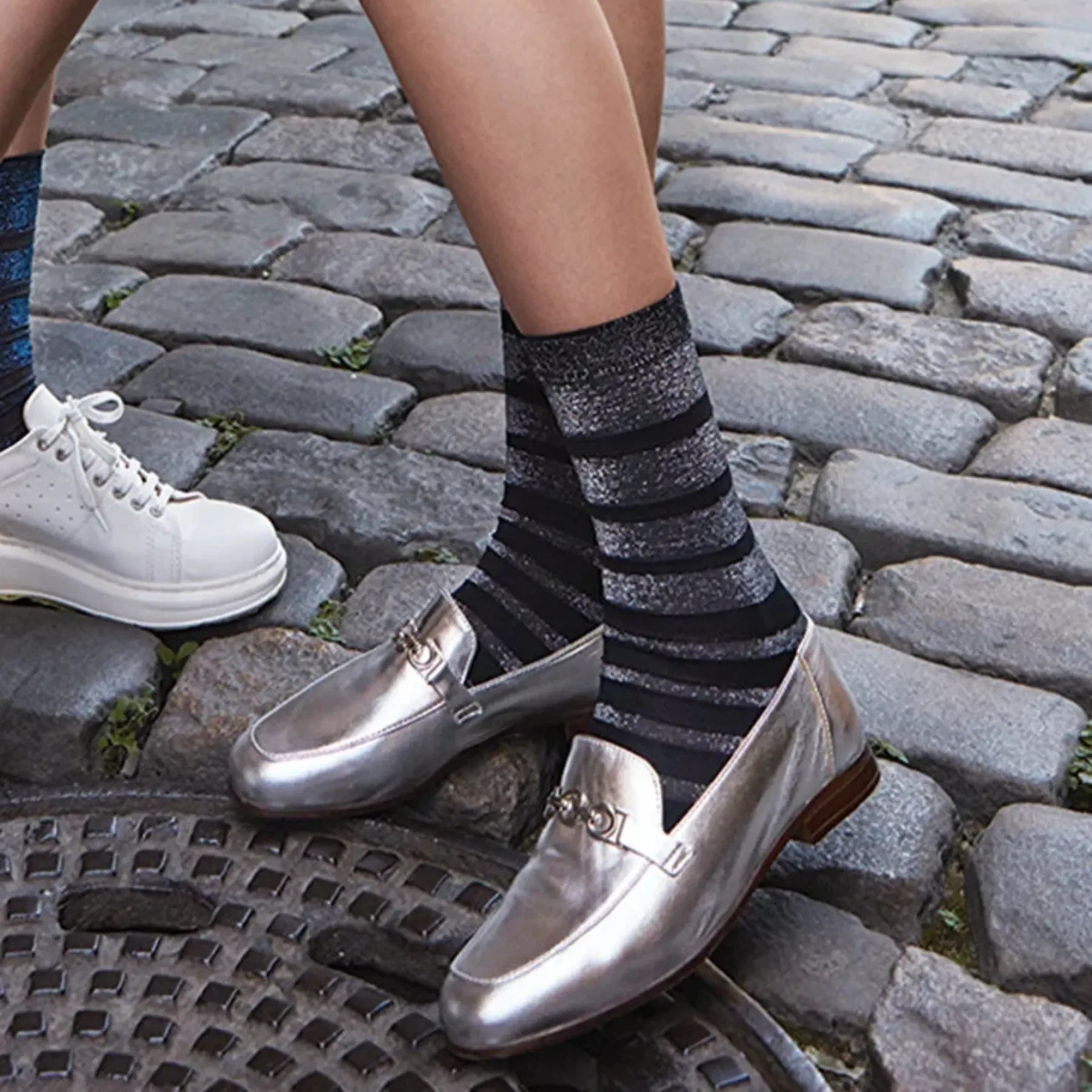
Uniq Socks' Alpaca Wool Striped Winter Socks, for example, combine alpaca and merino and are positioned for cold-weather wear, hiking, trekking and everyday winter use.
For shoppers comparing hiking socks in Australia, check the complete specification rather than buying on fibre name alone. The same advice applies to wool hiking socks for travel, cold-weather walking and outdoor use.


Why Alpaca and Merino Work Well Together
The most practical answer to alpaca versus merino is often a considered blend.
Selected Uniq Socks winter styles already use alpaca and merino together. The current Alpaca Wool Striped Winter Socks combine the two fibres in a cold-weather style designed for hiking, trekking and everyday winter wear. The Alpaca Wool Plain Coloured Winter Socks also combine alpaca and merino with supporting fibres for strength, flexibility and durability.
This approach makes sense in hosiery because different fibres can contribute different characteristics to the yarn and finished sock. Alpaca can contribute the soft, insulating character shoppers are looking for, while merino and supporting fibres can help create a balanced construction for repeated wear.
The current product pages for these specific styles identify the finished socks as holding OEKO-TEX® Standard 100 certification. STANDARD 100 means the certified textile has been tested for harmful substances against the standard's criteria. It should not be presented as organic certification or as proof of a product's complete environmental footprint. About OEKO-TEX® STANDARD 100.
Choosing Wool Socks in Australia: What Matters Most
The best wool socks in Australia for one person may be wrong for another because Australian winters vary by location, activity and footwear.
- Start with the use case. Everyday shoes, boots and hiking footwear have different space, cushioning and friction requirements.
- Check the complete fibre composition. Do not judge quality from the word alpaca, merino or wool alone. Supporting fibres can play an important role in stretch, recovery and durability.
- Choose appropriate thickness. More bulk is not always better if it overcrowds the footwear.
- Look at construction details. Cuff comfort, toe finish, reinforcement, sock height and sizing all influence long-wear comfort.
- Check product-specific claims. Certification, composition and care information should be verified for the exact style you are buying.
For current options, explore our women's wool socks and men's wool socks collections.
Alpaca vs Merino for Different Winter Uses
- Everyday commuting: either fibre can work well when the thickness suits the shoe.
- Boots: fit and cushioning matter more than the fibre name alone. A well-fitted blend with appropriate cushioning can be more useful than a thicker sock that compresses the foot.
- Walking and hiking: prioritise secure fit, cushioning, reinforcement and moisture-management design.
- Travel: choose a construction that works across the shoes and temperatures you expect to encounter rather than assuming one fibre will perform best in every situation.
- Indoor winter comfort: softness and a relaxed fit may matter more than technical reinforcement.
How to Care for Alpaca and Merino Wool Socks
Always follow the care label for the exact pair.
Different fibre percentages, supporting yarns, knitting methods and finishes can change the correct washing and drying method. Where the product instructions specify cold or gentle washing, mild detergent and air drying, follow those directions rather than applying one universal wool-care routine.
Avoid unapproved high heat and aggressive handling, particularly with animal-fibre blends. Good care helps protect the knit, supporting elastic fibres and shape of the finished sock.
Alpaca vs Merino Wool Socks: Final Verdict
There is no universal winner.
Alpaca is a compelling fibre for soft, insulating winter textiles. Merino wool has well-documented moisture-vapour management, natural elasticity and a long history in next-to-skin and outdoor clothing.
For finished socks, though, fibre is only part of the answer. Blend, yarn, knit density, thickness, reinforcement, cushioning, fit and footwear can matter just as much.
For many Australian winter conditions, a well-designed alpaca-merino blend is not a compromise between two fibres. It can be a deliberate way to combine desirable characteristics in one practical winter sock.
Frequently Asked Questions
Are alpaca socks warmer than merino wool socks?
Not universally. Research comparing Huacaya alpaca and Merino sheep fleece found more efficient insulation in the alpaca samples under the study conditions, but that research examined fleece rather than finished socks. Sock warmth also depends on blend, yarn, knit density, thickness, fit and footwear.
Are merino wool socks good for Australian winter?
Yes, when the weight and construction suit the conditions. Merino is widely used in cold-weather and active apparel because it offers insulation, moisture-vapour management and natural elasticity.
Are alpaca socks softer than merino socks?
They can be, but there is no universal rule. Fine alpaca can feel very smooth, while fine and superfine merino can also feel very soft. Fibre diameter, yarn construction and finishing influence the final feel.
Which is better for hiking: alpaca or merino?
Merino is well established in outdoor clothing, but neither fibre automatically makes a good hiking sock. Fit, cushioning, reinforcement, thickness, blend and footwear compatibility are essential. A well-designed alpaca-merino blend can also be suitable for hiking and trekking.
Do alpaca-merino blend socks make sense?
Yes. Blending can combine different fibre characteristics, while supporting fibres can improve stretch, recovery and abrasion resistance. In hosiery, a balanced blend can be more practical than maximising one fibre percentage.
What are the best wool socks for winter in Australia?
Choose according to climate, activity and footwear rather than fibre name alone. Look for appropriate thickness, a secure fit, useful cushioning or reinforcement where needed, and a fibre blend suited to how the socks will be worn.