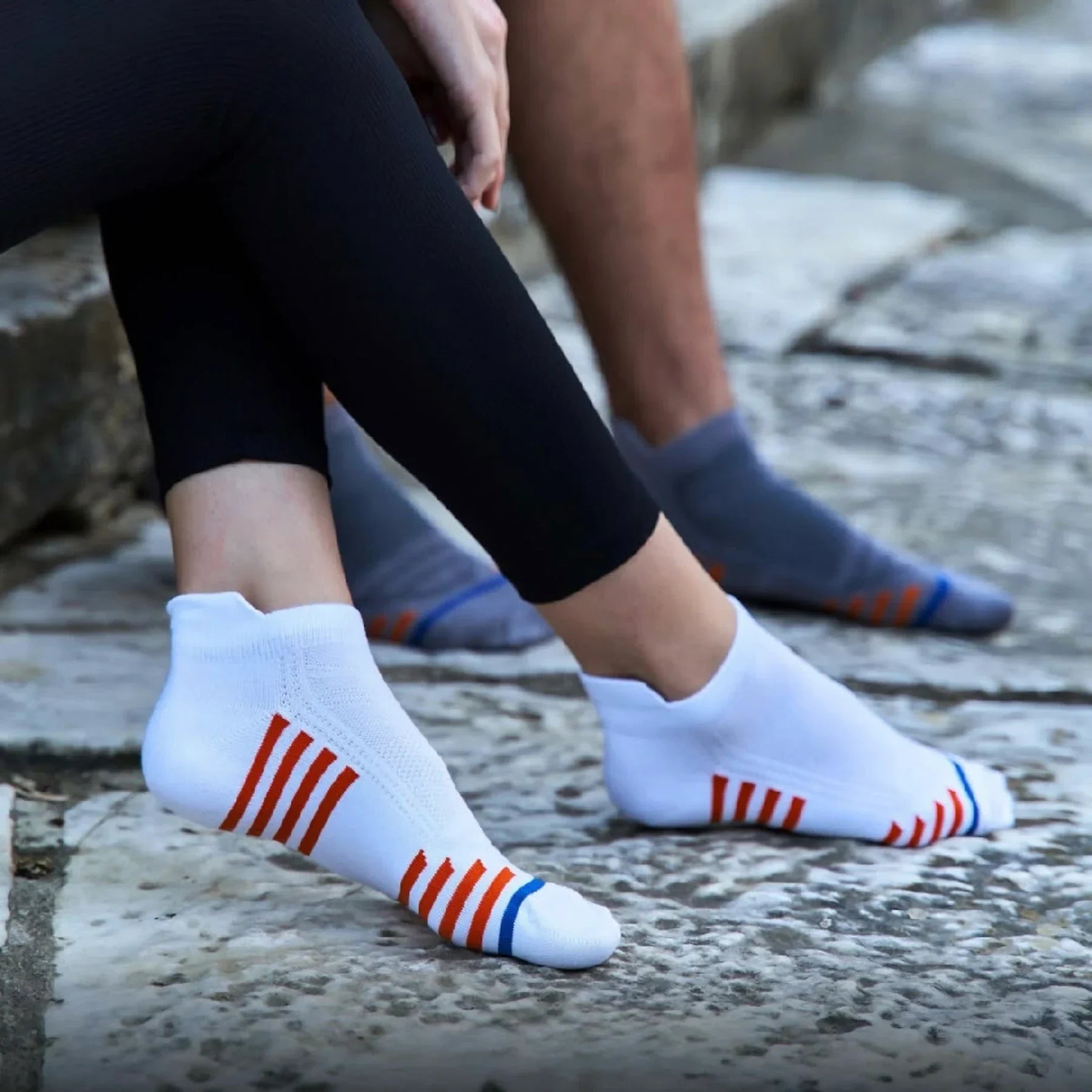
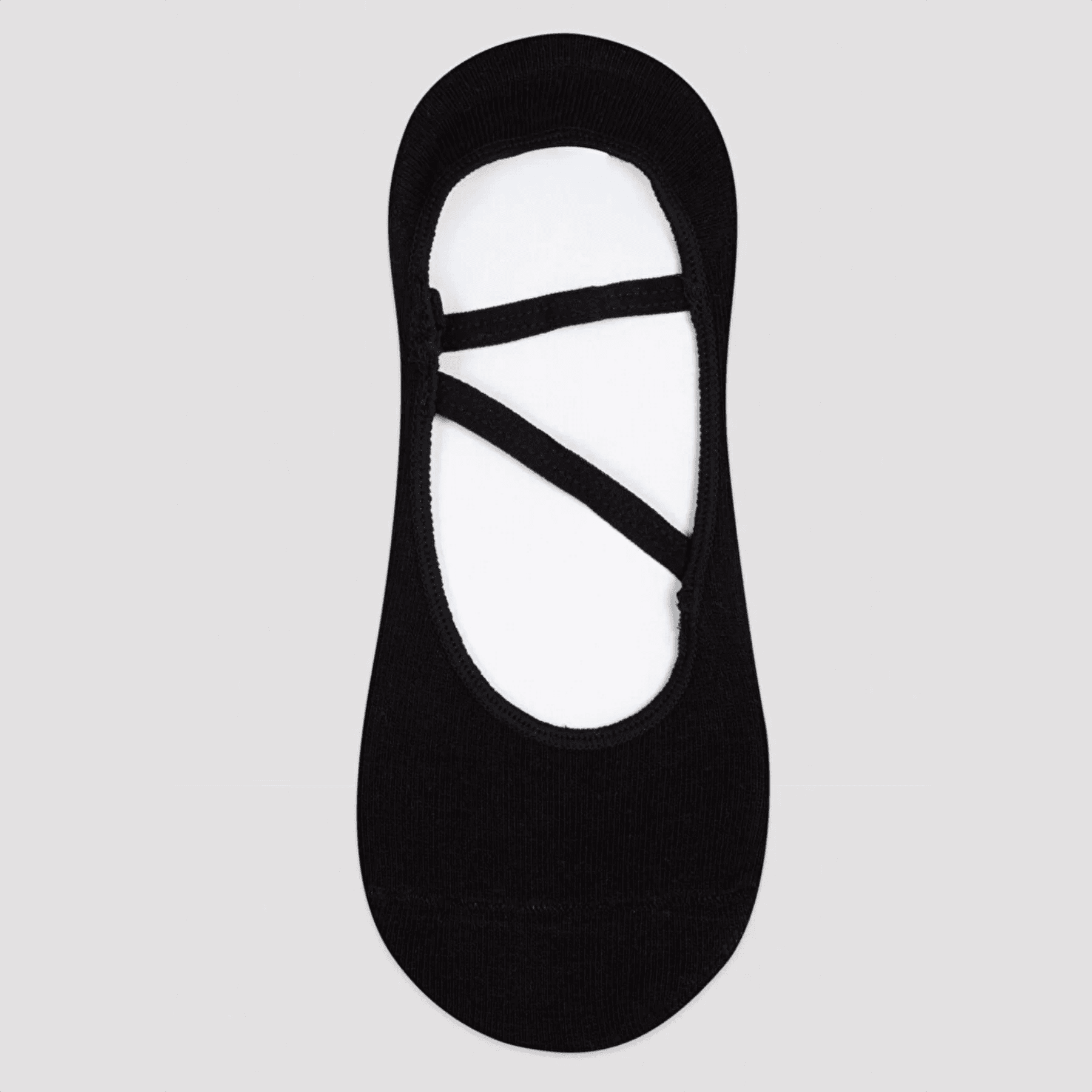
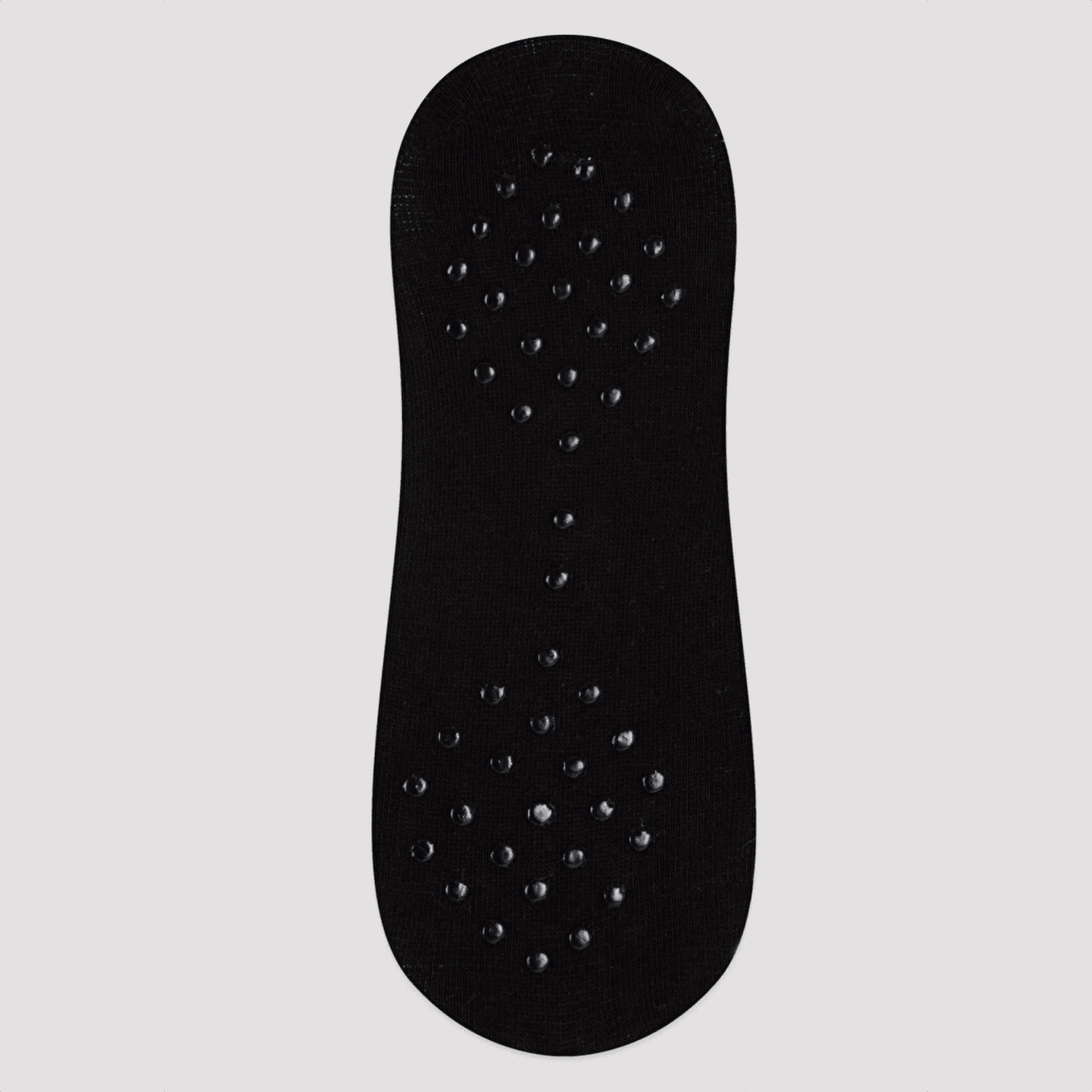
Barre socks and Pilates socks are often the same kind of studio grip sock presented under different labels. For most people, the better question is not which name appears on the packaging, but whether the sock fits securely, places grip where the foot meets the floor, mat or equipment, and meets the rules of the studio. One well-chosen pair can often work for both barre and Pilates.
Barre socks vs Pilates socks: the short answer
There is no single construction detail that separates every barre sock from every Pilates sock. Both labels commonly describe socks with grip on the sole for studio movement. Differences such as toe coverage, straps, cuff height and grip pattern exist between individual designs, but they do not create two consistently separate product categories.
Barre often includes standing work, rises and small controlled movements on a studio floor. Pilates may be practised on a mat or on equipment such as a reformer. Those settings can influence personal preference, but neither the class name nor the amount of visible grip can guarantee that a particular sock will suit every movement or surface.
What can differ between studio socks
Grip placement
Look for grip beneath the areas that make contact during your class, particularly the heel and forefoot. Coverage is only one part of the decision: the grip material, its condition, the studio surface and the fit of the sock all influence how it feels in use. Grip socks can support traction, but they do not eliminate the possibility of slipping or injury.
Fit
A studio sock should sit comfortably without twisting, bunching or leaving excess fabric at the heel or toes. If the foot moves inside the sock, the grip on the outside cannot correct the fit. Use the product's stated size guide rather than automatically sizing down.
Toe coverage and straps
Full-toe, open-top, toeless and five-toe designs are available across the studio-sock market. Full-toe styles provide more fabric coverage, while open designs leave more of the foot exposed. Neither is universally required. Check the policy of the studio you attend and choose the style that feels comfortable and stays in place.
Studio requirements
Policies are set by individual operators. Pure Barre says sticky socks are required in its classes, while Studio Pilates says clients must wear socks and may bring their own. These examples should not be treated as rules for every Australian studio; confirm requirements before your first class.
Barre and Pilates sock feature comparison
| Feature | For barre | For Pilates | What to check |
|---|---|---|---|
| Grip | Useful where the foot contacts the studio floor | Useful on a mat or where permitted on reformer equipment | Coverage at heel and forefoot, condition of the grip, and suitability for the surface |
| Fit | A secure, comfortable fit matters in both disciplines | No twisting, bunching or excess fabric | |
| Toe design | A matter of comfort and studio policy rather than a reliable category difference | Full-toe, open or five-toe; confirm what your studio accepts | |
| Material | Choose according to verified composition, feel and care instructions | Read the product listing and garment label rather than relying on general fibre claims | |
| Cuff or straps | Style details may help a particular design feel secure, but are not guarantees | Comfort, fit and whether the sock stays in position | |
Can one pair work for both barre and Pilates?
Yes, often. If the same pair fits well, offers grip at the heel and forefoot, and complies with both studios' rules, there is usually no need to buy separate socks simply because one class is called barre and the other Pilates.
You may still prefer different pairs if your studios have different dress requirements, if one style fits better for a particular class, or if you want clean socks available across several sessions. That is a practical preference, not evidence that all barre and Pilates socks are fundamentally different.
Do mat and reformer Pilates need different socks?
Mat and reformer classes use different surfaces, but there is no universal sock rule for either format. Some mat classes are practised barefoot; some studios request socks. Reformer policies also vary, although many operators specify socks or grip socks. Follow the instructor's guidance and the rules of the studio or equipment provider.
If Pilates is your main focus, the existing Uniq Socks guide to what socks to wear for Pilates covers the beginner purchase decision, while the guide to choosing Pilates socks looks more closely at product features. For a separate comparison, see yoga socks vs Pilates socks.
A Versatile Uniq Socks Pair for Barre and Pilates
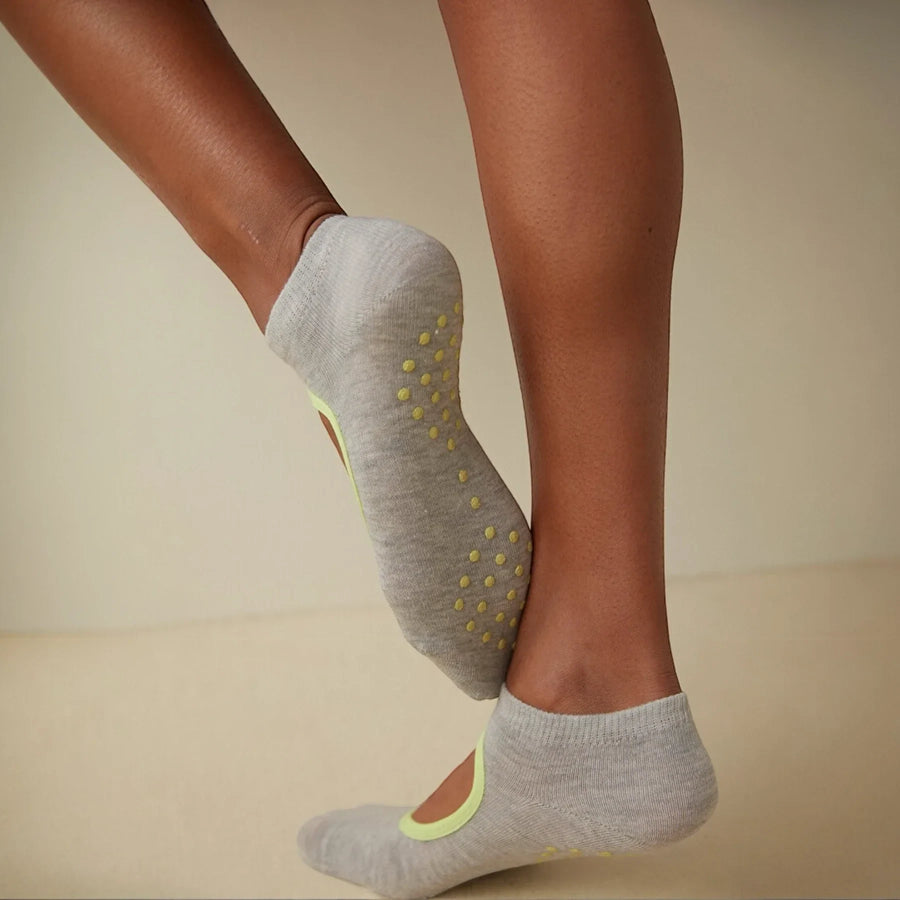
Uniq Socks’ Grey & Yellow Anti-Slip Cotton Yoga & Pilates Socks combine a soft cotton construction with a silicone anti-slip sole and seamless toe. The lightweight studio design is intended for yoga and Pilates, with grip placement designed to add traction underfoot.
For any certification claim, rely on the current individual product page. Where a specific Uniq Socks cotton style is verified as OEKO-TEX® Standard 100 certified, the tested textile has been assessed for harmful substances against the standard’s criteria; this certification should not be assumed across every cotton product.
Fit and care checklist
- Ask the studio. Confirm whether socks are required and whether it specifies grip or toe coverage.
- Use the stated size. Do not size down unless the product's own guidance tells you to.
- Check the fit. The sock should sit comfortably without twisting, bunching or excess fabric.
- Inspect the sole. Check that the grip is intact before class and replace a damaged pair when it no longer performs as intended.
- Follow the label. Product-specific care instructions take priority over general advice.
Care requirements can vary between studio socks, so follow the instructions on the individual product label or current product page rather than applying one washing routine to every grip style.
Bottom line
Barre socks and Pilates socks overlap far more than their labels suggest. Start with studio rules, then compare fit, grip placement, toe coverage, verified materials and care. A comfortable pair with grip at the heel and forefoot can often move between both classes, but no sock removes all slipping or injury risk.
Prefer one refined studio pair? View the Grey & Yellow Anti-Slip Cotton Yoga & Pilates Socks from Uniq Socks.