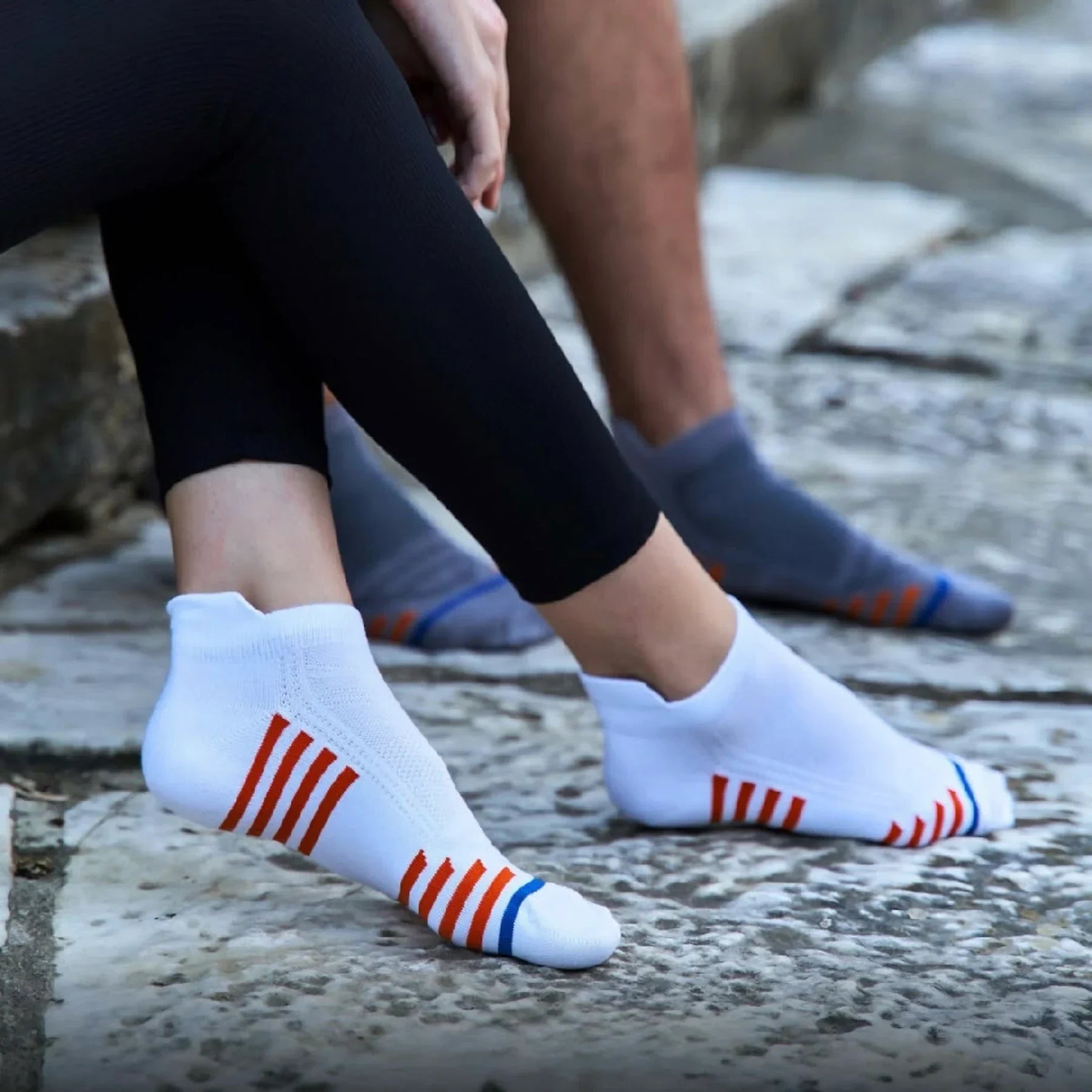
The best winter socks are not simply the thickest pair you can find.
For Australian winter conditions, warmth depends on several factors working together: fibre, yarn, knit density, cushioning, sock height, fit, footwear and how active you will be while wearing them.
A soft wool sock can be ideal for everyday winter wear. A more structured merino blend may suit longer walks or hiking. An alpaca-merino blend can offer a refined option for cold-weather comfort. A very thick thermal sock may work beautifully in roomy boots but feel uncomfortable inside fitted shoes.
That means the best winter socks in Australia depend less on a single material claim and more on matching the complete sock to the way you intend to wear it.
Quick Answer: What Are the Best Socks for Winter?
For most people, a good winter sock should provide:
- appropriate insulation for the conditions;
- enough breathability and moisture management for the activity;
- a comfortable fit without excessive pressure;
- sufficient cushioning for the footwear;
- reinforcement where repeated friction occurs;
- a fibre blend suited to the intended use; and
- a thickness that does not overcrowd the shoe or boot.
For everyday cold-weather wear, wool and wool-blend socks are particularly useful because wool fibres can help trap insulating air while also taking up and releasing moisture vapour. Woolmark explains that wool's natural crimp contributes to air being held within the textile structure, while its hygroscopic properties support moisture-vapour management. Read Woolmark's guidance on wool breathability and moisture.
But the fibre name alone does not tell you whether a finished sock will be warm, durable or comfortable.
Best Winter Socks in Australia at a Glance
| Winter use | What to prioritise | Suitable options |
|---|---|---|
| Everyday shoes | Moderate thickness, softness, comfortable cuff | Wool, merino or alpaca blends |
| Winter boots | Insulation, cushioning, secure fit | Medium-to-thick wool blends |
| Hiking | Moisture management, reinforcement, stable fit | Merino or performance wool blends |
| Travel | Versatility, comfort, manageable thickness | Merino and wool blends |
| Indoor winter wear | Softness and warmth | Alpaca, merino or other wool blends |
| Very cold conditions | Higher insulation with appropriate footwear | Heavier wool or thermal constructions |
The best choice is the one that works with your footwear and activity rather than the pair with the most dramatic warmth claim.

Why Wool Makes Sense for Winter Socks
Wool has several characteristics that make it useful in cold-weather clothing.
Its natural crimp contributes to a three-dimensional textile structure that can hold still air, helping with insulation. Wool is also hygroscopic: it can take up moisture vapour into its internal structure and release that moisture as conditions change. Woolmark notes that these characteristics can help wool garments manage the microclimate around the wearer. See Woolmark's fibre guidance.
That combination helps explain why wool socks appear so frequently in winter, hiking and outdoor categories.
However, not every wool sock performs the same way. A fine everyday wool sock and a thick hiking sock can contain similar headline fibres while differing substantially in warmth, cushioning, durability and fit.
Merino Wool Socks for Winter
Merino is one of the most established fibres in cold-weather and active clothing.
Fine merino fibres can feel soft next to skin, while the fibre's natural crimp contributes elasticity and recovery. Merino wool can also absorb and release moisture vapour, which is useful in enclosed footwear where warmth and moisture need to be managed together. Learn more about wool fibre properties from Woolmark.
For Australian shoppers comparing merino wool socks, the important question is not simply how much merino the sock contains. Consider sock thickness, knit density, heel and toe reinforcement, cushioning, supporting fibres, cuff design and the footwear in which the socks will be worn.
A lighter merino sock may suit everyday shoes, while a more technical blend may be better for hiking boots or longer walks.
Alpaca Socks for Winter
Alpaca is another premium animal fibre commonly used in winter textiles.
Fine alpaca fibre can feel soft and refined, and alpaca-containing socks can be appealing for lower-activity winter wear, commuting, travel and indoor-outdoor use. As with merino, the finished construction matters more than the material name alone.
Alpaca socks are often blended with merino or supporting fibres because hosiery must stretch, recover and withstand repeated friction inside footwear.
For a deeper fibre-level explanation, read our alpaca wool socks in Australia guide, which covers alpaca fibre, winter performance and care in more detail.
Alpaca vs Merino for Winter Socks
Neither fibre wins every category.
Alpaca can be a strong option where a soft, insulating winter feel is the priority. Merino has especially well-documented moisture-vapour management, elasticity and activewear applications. For many finished socks, an alpaca-merino blend can make practical sense because different fibres can contribute different characteristics to the finished yarn.
If you want the direct fibre comparison rather than this broader buying guide, read alpaca vs merino wool socks. That guide examines warmth, softness, moisture management and hiking use in more depth.

Are Thick Socks Always Warmer?
Not necessarily.
Thickness can contribute to insulation because a thicker construction may hold more air, but the sock still needs enough space inside the footwear. If a thick sock makes a shoe or boot excessively tight, comfort can suffer.
A better approach is to match sock thickness to the available footwear volume. For fitted everyday shoes, a medium or lightweight wool sock may be preferable. For roomy winter boots, a thicker cushioned sock may be more suitable.
Warm Socks for Everyday Winter Wear
For day-to-day winter use, versatility usually matters more than maximum insulation.
A good everyday winter sock should fit comfortably inside regular footwear, provide enough warmth for the conditions and remain comfortable over several hours.
Look for a soft fibre blend, moderate thickness, a secure but comfortable cuff, a smooth toe area, adequate stretch and recovery, and a weight suited to the shoe.
This is where merino and alpaca-merino blends can work particularly well because they can provide winter-oriented fibre characteristics without necessarily requiring an extremely bulky construction.
Best Winter Socks for Boots
Boot socks need to work as part of the entire footwear system.
A sock that is too thin may not provide enough cushioning or warmth for a roomy boot. A sock that is too thick may create pressure and crowd the foot.
For winter boots, consider boot volume, sock height, heel placement, cushioning, reinforcement, moisture-management needs and whether the activity involves prolonged walking. Crew and higher sock lengths can also provide useful coverage where the boot shaft sits against the leg.

Best Wool Hiking Socks
Hiking creates a different set of demands from normal everyday winter wear.
The sock experiences more sustained movement, friction and moisture, so fit becomes particularly important. A good pair of wool hiking socks should provide stable heel placement, minimal bunching, appropriate cushioning, reinforcement in high-wear zones, a thickness matched to the boot, useful moisture management, and sufficient stretch and recovery.
For a dedicated hiking-specific guide, read our wool hiking socks Australia guide.
Merino is particularly common in outdoor sock constructions because of wool's moisture-vapour behaviour, elasticity and temperature-buffering characteristics. Performance hiking socks are also frequently blends rather than single-fibre constructions because supporting fibres can contribute strength, recovery and abrasion resistance.
For a current Uniq Socks example designed for cold-weather wear, hiking and trekking, see the Alpaca Wool Striped Winter Socks.

Hiking Socks in Australia: Match the Sock to the Trail
Australian hiking conditions vary significantly. A short cool-weather walk may need only moderate cushioning, while a longer winter hike in colder conditions can demand more insulation and support.
- Footwear: hiking boots usually accommodate more sock volume than fitted casual shoes.
- Duration: longer walks increase the importance of moisture management, reinforcement and stable fit.
- Temperature: cold mornings and exposed conditions may justify a warmer construction.
- Terrain: steeper or rougher terrain increases movement inside footwear, making fit and cushioning particularly important.
The best hiking socks in Australia therefore cannot be selected from material alone.
What About Thermal Socks?
“Thermal socks” is a broad commercial term rather than a single fibre or construction standard.
Some thermal socks use wool or merino blends. Others rely largely on synthetic yarns, brushed interiors or looped constructions designed to hold insulating air. That does not automatically make a thermal sock better than a wool sock.
A thick thermal construction can make sense for roomy boots, very cold outdoor conditions or indoor warmth. For everyday shoes or active walking, a less bulky wool or merino blend may be more practical.
What Are the Warmest Socks for Cold Weather?
There is no universally warmest sock because test conditions, footwear, fit and individual activity all vary.
The better question is: which sock provides appropriate insulation without compromising fit, moisture management or comfort?
For cold-weather socks, useful features can include an insulating fibre, appropriate knit density, thicker cushioning where useful, higher coverage, reinforced high-wear areas and a fit that stays secure without bunching.
Avoid relying on unsupported claims such as “X times warmer” unless a finished product has been tested under a defined method.
Are Wool Socks Good for Sweaty Feet?
Wool's ability to take up and release moisture vapour can help manage the environment inside clothing and footwear. Woolmark explains this moisture-vapour behaviour in more detail.
That does not mean a wool sock prevents sweating. Sweat levels depend on the person, temperature, activity and footwear ventilation.
For more active conditions, look at the complete sock design, including thickness, ventilation, fit and fibre blend. A heavily insulated sock may be unnecessarily warm for a high-output activity even if the fibre itself has useful moisture-management properties.
Wool Socks vs Cotton Socks for Winter
Wool and cotton behave differently when moisture is present. Wool can take up moisture vapour within its fibre structure while continuing to function as an insulating textile. Cotton is highly absorbent and can hold substantial liquid moisture once wet.
For low-activity indoor use, cotton socks can still be comfortable. For colder outdoor conditions, boots and extended walking, wool-based constructions are often selected because insulation and moisture management become more important.
The exact choice should still depend on the finished sock design rather than assuming every wool sock is superior to every cotton sock.
How to Choose the Right Winter Sock Thickness
Lightweight
Best for office wear, fitted shoes, mild winter days and people who dislike bulky socks.
Midweight
Best for everyday winter wear, travel, casual boots, colder mornings and versatile use.
Heavyweight
Best for roomy winter boots, colder outdoor conditions and lower-activity cold exposure.
There is no need to choose the heaviest pair simply because it is winter.

Why Sock Fit Matters So Much
A premium fibre cannot compensate for poor fit.
A winter sock should sit smoothly against the foot without excessive bunching. The heel should sit close to the wearer's heel, the toe area should not create uncomfortable folds, and the cuff should keep the sock in place without unnecessary pressure.
In hiking and boot applications, stable fit also helps reduce movement between the sock, foot and footwear. This is one reason supporting fibres are commonly used in wool socks: the finished sock needs more than insulation; it also needs structure and recovery.
How to Wash Wool Winter Socks
Always follow the care instructions for the specific product first.
For machine-washable merino socks, Woolmark recommends using the care label as the primary guide and, where suitable, a wool cycle or gentle cold setting with an appropriate mild detergent. Hand-wash-only socks require different treatment. See Woolmark's guide to washing merino wool socks.
Do not assume all alpaca, merino and wool blends share identical care instructions. Fibre percentages, supporting yarns and finishing methods can change the correct washing and drying method.
How Many Winter Socks Do You Need?
There is no universal number, but usage pattern matters.
Someone wearing wool socks only on occasional cold weekends will need fewer pairs than someone wearing them daily through winter. A practical wardrobe may include lighter wool socks for everyday shoes, medium-weight socks for general winter wear, heavier or cushioned socks for boots, and dedicated hiking socks for outdoor use.
This approach is usually more useful than buying several pairs of the same thickness.
Choosing Winter Socks for Australian Conditions
Australia does not have one winter climate.
A shopper in subtropical Queensland may primarily need comfortable socks for cool mornings and travel. Melbourne winter can call for flexible everyday warmth. Canberra and inland regions can experience substantially colder mornings, while Tasmanian and alpine conditions can place greater emphasis on insulation and suitable outdoor footwear.
That makes versatility important. Instead of asking “What is the warmest sock?”, ask: what conditions will I actually wear this sock in?
That question leads to a better choice.
Where Wool Socks Fit Into a Winter Wardrobe
For shoppers specifically looking for premium natural-fibre options, wool remains one of the most useful winter materials.
Uniq Socks currently offers winter styles across its men's and women's wool collections, including alpaca-merino blends and other wool constructions. You can explore current women's wool socks and men's wool socks as the main shopping destinations.
For another alpaca-merino option, the Alpaca Wool Plain Coloured Winter Socks provide a simpler cold-weather style.
Best Winter Socks in Australia: Final Checklist
Before buying winter socks, check:
- Fibre: wool, merino, alpaca or another suitable blend.
- Thickness: appropriate for the shoe or boot.
- Fit: secure without bunching or excessive pressure.
- Cushioning: suitable for the intended activity.
- Moisture management: especially important for walking and hiking.
- Reinforcement: useful for higher-friction wear.
- Height: appropriate for the footwear.
- Care requirements: realistic for how you plan to use them.
- Actual product specification: rather than relying on generic fibre marketing.
The best winter socks are not defined by one feature. They are the pair that balances warmth, comfort, fit and intended use.
Frequently Asked Questions
What are the best socks for winter in Australia?
For many people, wool and wool-blend socks are strong winter choices because they can combine insulation with useful moisture-vapour management. The best pair still depends on climate, footwear, activity and sock construction.
Are merino wool socks warm enough for winter?
They can be. Merino is widely used in winter and outdoor clothing because of wool's insulation, moisture-vapour behaviour, elasticity and comfort characteristics. The sock's thickness and construction determine how suitable it is for a particular temperature or activity.
Are alpaca socks good for winter?
Yes, alpaca-containing socks can be suitable for winter wear. The actual warmth and comfort depend on fibre quality, blend, knit density, thickness, fit and footwear.
Are thick socks better for winter?
Not always. Thick socks can provide more insulation, but only when the footwear has enough room. Excessive thickness inside fitted footwear can reduce comfort.
What socks are best for hiking in winter?
Look for a secure sock with useful moisture management, appropriate cushioning, reinforcement and a thickness matched to the boot. Merino and other wool blends are commonly used in hiking socks, but construction and fit are just as important as fibre.
Are thermal socks better than wool socks?
Not automatically. “Thermal” describes a broad category of constructions. A thick thermal sock may be useful for very cold, low-activity conditions, while a wool or merino blend may offer a better balance of warmth, thickness and moisture management for other uses.
How should wool socks be washed?
Follow the product care label. Where machine washing is permitted, use the cycle and detergent recommended for that specific pair. Woolmark advises a wool cycle or suitable gentle cold setting for many machine-washable merino socks, but individual product instructions take priority.