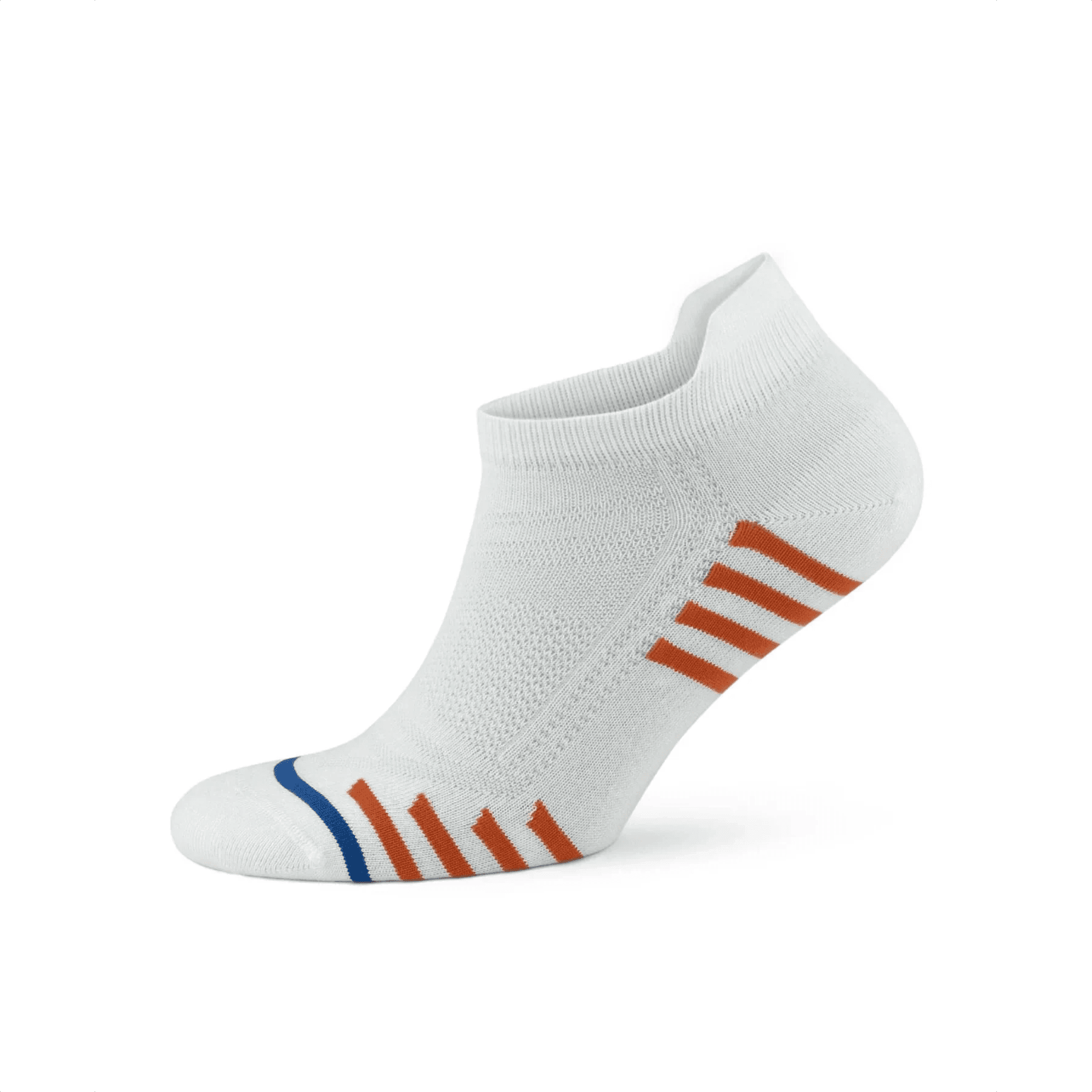
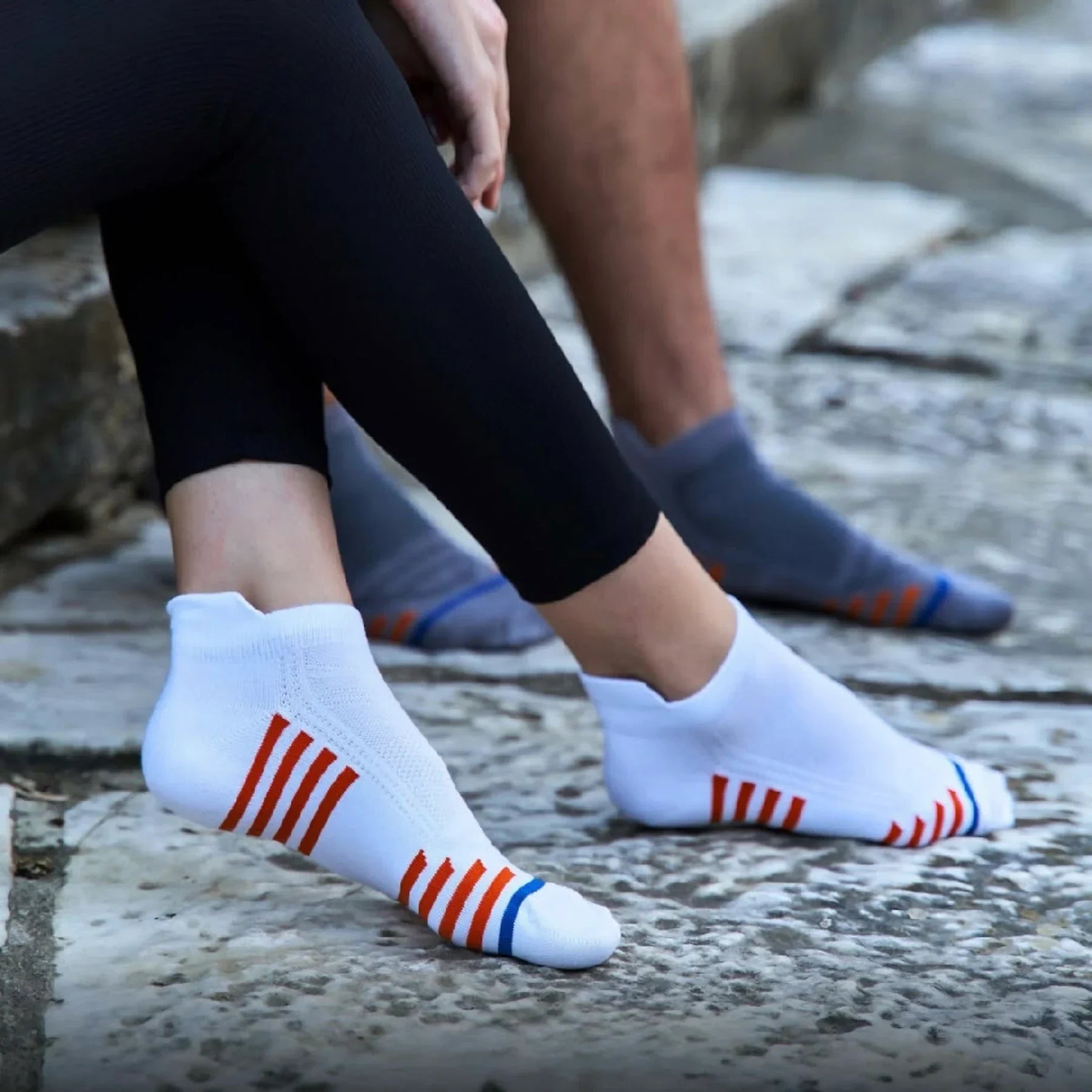
Choosing the right wool hiking socks is less about finding the thickest pair and more about matching fibre, fit, cushioning and footwear to the trail.
Australian hiking conditions can vary considerably. A short dry day walk, a cold alpine start and a longer trek in boots place different demands on a sock. The best hiking sock needs to stay comfortably in place, work with the available space inside the shoe or boot, manage moisture appropriately and provide enough cushioning for the activity.
Wool and merino are widely used in hiking socks, but fibre alone does not determine performance. Yarn construction, blend percentages, knit density, reinforcement, sock height, cushioning, shoe fit and care all affect how a finished pair feels and wears.
This guide explains how to choose wool hiking socks in Australia without relying on exaggerated warmth, blister-prevention or fibre-purity claims.
Wool Hiking Socks: The Quick Answer
For most walkers and hikers, a useful hiking sock should provide:
- a secure fit with minimal bunching;
- a heel that sits correctly on the foot;
- appropriate cushioning for the shoe, boot and terrain;
- moisture management suited to the activity;
- reinforcement in higher-wear areas;
- a sock height that works with the footwear collar;
- enough insulation for the conditions without overcrowding the footwear; and
- stretch and recovery that help the sock retain its shape during movement.
Merino and other wool blends can be strong options because wool combines insulation with useful moisture-vapour behaviour. However, the complete construction should always be considered before the headline fibre.
Hiking Socks Australia: What to Choose at a Glance
| Hiking situation | What to prioritise | Typical sock approach |
|---|---|---|
| Short day walk | Comfort, secure fit, moderate cushioning | Lightweight or midweight wool blend |
| Longer trail walk | Moisture management, reinforcement, stable fit | Midweight merino or wool blend |
| Hiking boots | Boot-compatible height, cushioning, heel stability | Crew or higher wool hiking sock |
| Trail runners | Lower bulk, close fit, moisture management | Lightweight or low-profile hiking sock |
| Cold-weather hiking | Insulation without excessive compression | Midweight or heavier winter hiking sock |
| Multi-day walking | Fit, moisture management, practical sock rotation | Multiple suitable pairs rather than one very heavy pair |
The right choice depends on the footwear and conditions. There is no single sock weight or fibre blend that is ideal for every Australian trail.
Why Hiking Socks Are Different From Everyday Socks
Hiking increases repeated movement between the foot, sock and footwear. Walking duration, gradients, pack weight, heat, moisture and boot fit can all change how the sock feels over time.
An everyday sock may be comfortable for commuting but lack the reinforcement, cushioning or stable fit needed for several hours of walking. Conversely, a heavily cushioned hiking sock can be unnecessarily bulky inside a fitted walking shoe.
That is why good hiking socks in Australia should be selected as part of the complete footwear system rather than as an isolated item.
Why Wool Works Well in Hiking Socks
Wool has characteristics that make it useful in active and cold-weather clothing. Its natural crimp contributes to a textile structure that can hold air, while the fibre is hygroscopic, meaning it can take up and release moisture vapour as conditions change.
The Woolmark Company describes wool as naturally breathable and able to help manage moisture vapour within the clothing microclimate. Read Woolmark's guidance on wool breathability and moisture.
Those properties help explain the widespread use of wool hiking socks, but they do not mean every wool sock performs equally. Thickness, yarn, knit, blend and footwear remain critical.
Merino Wool Hiking Socks
Merino is one of the most common wool fibres used in hiking and outdoor clothing. Fine merino can feel soft next to skin, while wool's natural crimp contributes elasticity and recovery. Woolmark also documents wool's moisture-vapour management and temperature-buffering characteristics. Learn more about wool fibre properties.
For shoppers comparing merino hiking socks or merino wool socks, the fibre percentage should not be the only decision point. Many performance socks are blends because nylon, polyamide, elastane or other supporting fibres can contribute abrasion resistance, stretch, recovery and fit.
A small field study involving 37 military recruits compared a polypropylene sock with a sock containing 50% Merino wool alongside polypropylene and polyamide. During repeated 6.5 km marches, the Merino-containing blend was rated cooler, less damp and more comfortable under those study conditions, and two of three measured skin sites were drier. View the study on sock fibre type and foot microclimate.
That study is useful evidence that fibre blend and textile construction can influence the foot environment, but it does not prove that every merino hiking sock will outperform every synthetic sock.
Alpaca and Alpaca-Merino Hiking Socks
Alpaca fibre is also used in winter socks, often as part of a blend rather than as the only fibre. For hiking, that distinction matters because a sock must combine insulation and comfort with stretch, recovery and resistance to repeated footwear friction.
If you are searching for alpaca hiking socks, check the complete composition and the intended use of the finished product rather than assuming alpaca content alone makes a sock suitable for the trail.
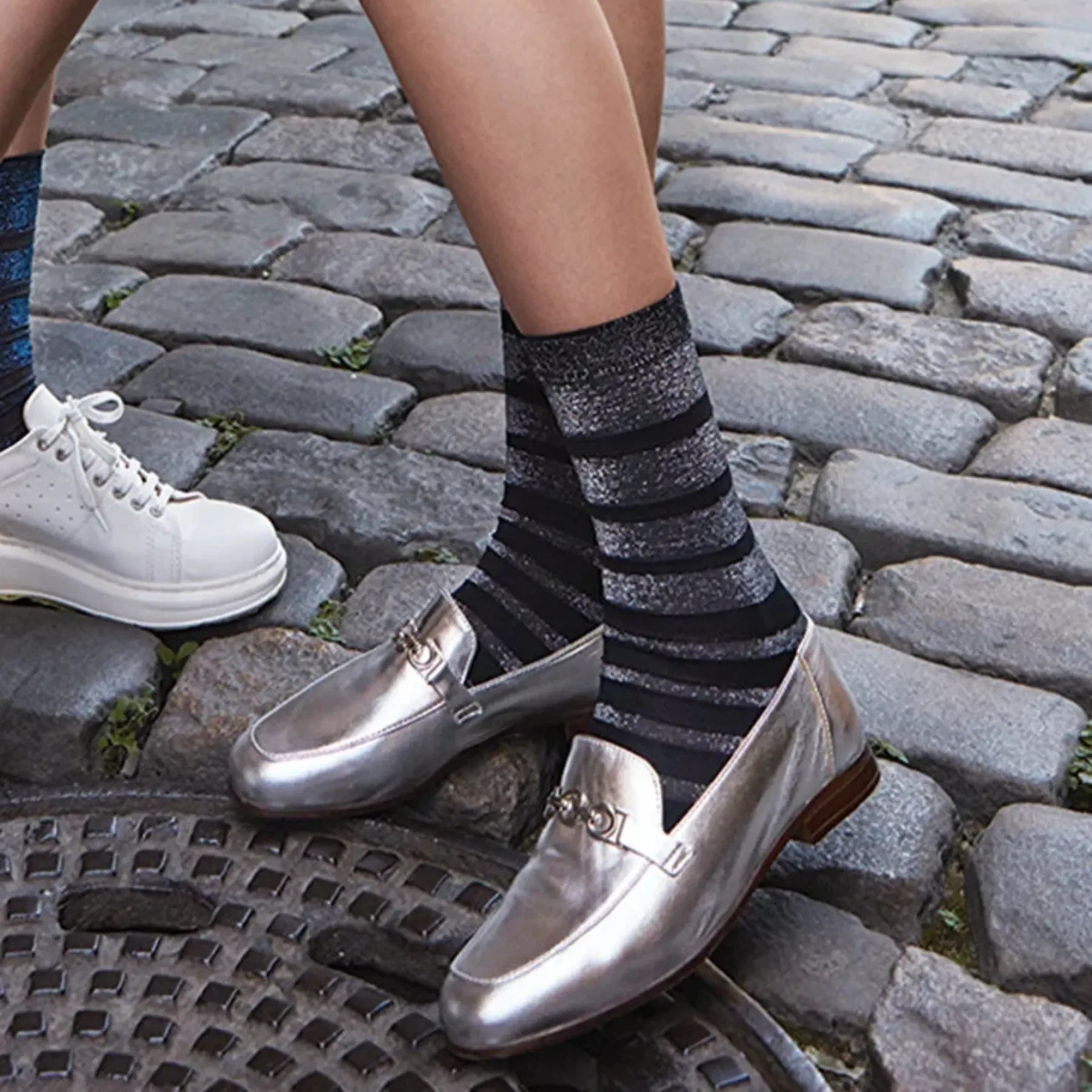
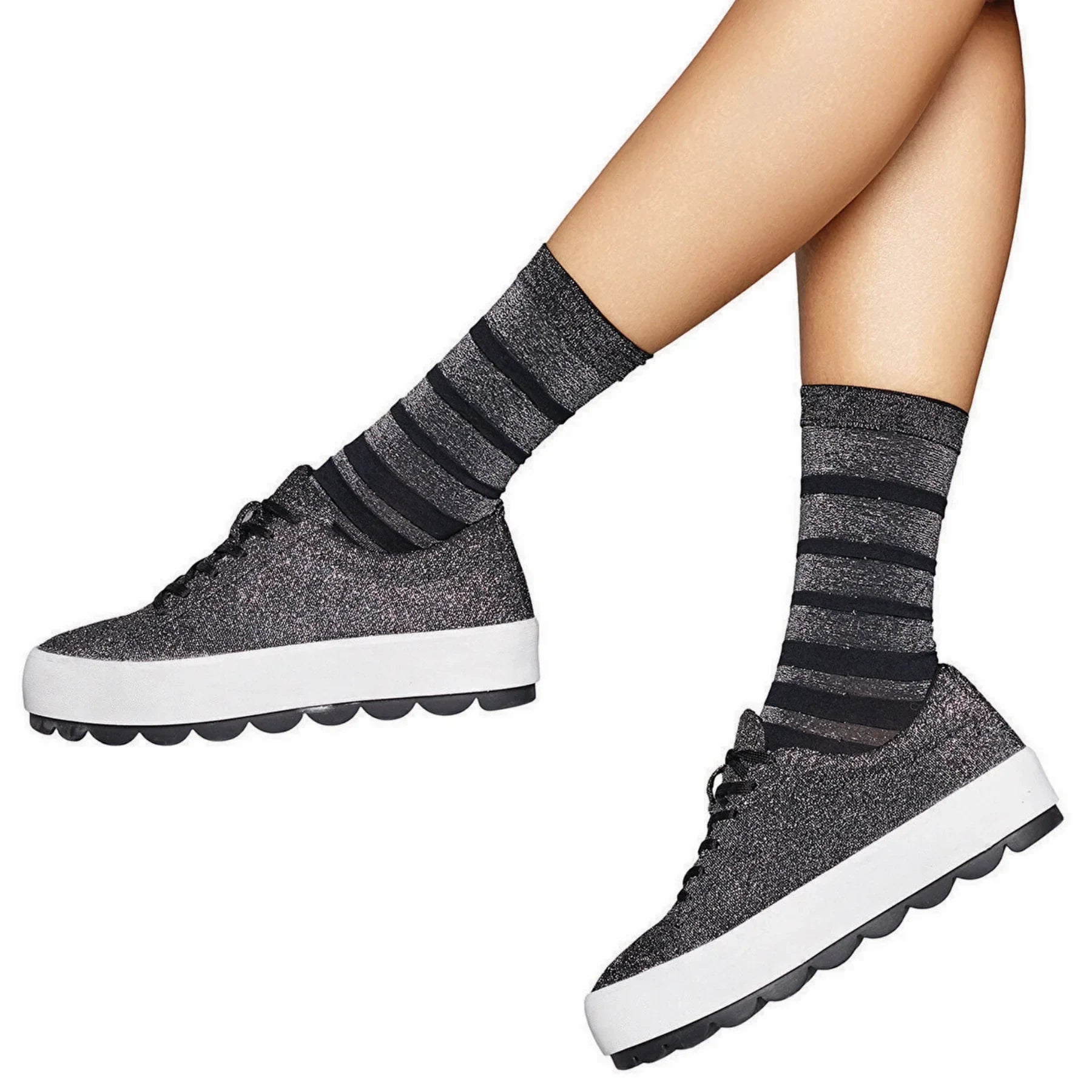
Uniq Socks' Alpaca Wool Striped Winter Socks are a verified alpaca-and-merino blend positioned for cold-weather wear, hiking and trekking. The blend also contains polyamide as a supporting fibre.

For more detail on alpaca fibre and winter use, read our alpaca wool socks in Australia guide.
Why Fibre Blends Matter in Hiking Socks
A hiking sock has to do more than provide warmth. It is repeatedly stretched over the foot, compressed inside footwear and exposed to friction at the heel, toe and other contact areas.
That is why a thoughtfully engineered blend can be more practical than maximising the percentage of one luxury fibre. Wool or alpaca can contribute insulating and comfort characteristics, while supporting fibres can improve structure, fit, recovery and abrasion resistance.
When comparing socks, read the complete composition and product specification rather than treating fibre purity as a quality score.
Fit Comes Before Fibre
A premium fibre cannot compensate for poor hiking-sock fit.
The heel of the sock should sit close to the wearer's heel. The toe area should lie smoothly without large folds. The sock should stay in place without excessive bunching, while the cuff should provide enough hold for the intended activity without unnecessary pressure.
Footwear fit matters as well. Adding a thick sock to an already snug boot can reduce available space and create an uncomfortable fit. A lighter sock may perform better simply because it works more naturally with the footwear.
What Sock Height Is Best for Hiking?
Sock height should be chosen partly according to the footwear collar.
- Low or ankle hiking socks: can work with low-cut walking shoes and trail runners where the shoe collar does not rub higher on the ankle.
- Quarter socks: provide more coverage while remaining relatively low profile.
- Crew hiking socks: are a versatile choice for many hiking shoes and boots because they extend above the footwear collar.
- Higher socks: can provide additional leg coverage with taller boots or in colder conditions.
The best sock height is simply the one that works comfortably with your footwear and the conditions.
How Much Cushioning Do Hiking Socks Need?
Cushioning should match the footwear, trail and personal preference.
Light cushioning
Useful for fitted walking shoes, trail runners, warmer conditions and people who prefer less bulk.
Medium cushioning
A versatile option for general hiking, longer walks and many hiking boots.
Heavier cushioning
Can be useful with roomier boots, colder conditions or where more underfoot padding is preferred.
More cushioning is not automatically better. If extra material overcrowds the footwear, a thinner sock may be the more comfortable choice.
Moisture Management and Wet Hiking Socks
Moisture matters because hiking can create a warm, enclosed environment inside shoes and boots. Rain, creek crossings and wet ground can add external moisture as well.
An observational study of 203 long-distance hikers on the Camino de Santiago found that wearing wet socks was associated with a higher occurrence of foot blisters. The study reported an odds ratio of 1.94, while the proportion of natural versus synthetic fibre in the socks was not associated with blister presence. View the long-distance hiking blister study.
The practical lesson is not that one fibre prevents blisters. It is that sock moisture, fit, footwear and trail conditions all deserve attention. On longer walks, carrying a suitable dry spare pair can be a practical choice when conditions make wet socks likely.
Can Hiking Socks Prevent Blisters?
No sock should be marketed as a guaranteed blister-prevention solution.
A systematic review of friction-blister prevention strategies found limited high-quality evidence supporting commonly used approaches, including socks. Read the systematic review of friction-blister prevention.
That does not make sock choice irrelevant. A smooth fit, appropriate cushioning, suitable footwear and attention to moisture can all be practical parts of hiking comfort. It simply means those factors should not be turned into unsupported medical guarantees.
Winter Hiking Socks for Australian Conditions
Winter hiking socks need to balance insulation with footwear fit and activity level.
A cold morning walk can require more warmth than the same route on a mild afternoon. Alpine and exposed environments may call for a warmer sock and more protective footwear, while an active hike in milder conditions may be more comfortable in a lighter construction.
For shoppers looking for warm hiking socks, focus on appropriate thickness, fibre blend, cushioning and boot volume rather than assuming the heaviest sock is automatically the warmest practical choice.

For a broader comparison of cold-weather sock choices, see our best winter socks in Australia guide.
Hiking Socks for Trail Runners vs Hiking Boots
Trail runners and hiking boots usually have different internal volume, collar height and cushioning needs.
With trail runners, a lower-bulk hiking sock may preserve shoe fit and allow the foot to sit naturally inside the footwear. With boots, a crew or higher sock can provide useful coverage above the collar, and medium cushioning may suit the extra volume.
The correct combination is personal. Always judge the sock while wearing the footwear you actually intend to hike in.
Day Hikes vs Longer Walks
A short day hike allows more flexibility because exposure time is lower and changing conditions may be easier to manage.
On longer walks, small fit problems can become more noticeable. Stable heel placement, moisture management, reinforcement and a practical rotation of socks become increasingly important.
For multi-day walking, several suitable pairs are generally more useful than relying on one extremely heavy pair for every condition.
Should You Change Socks During a Long Hike?
There is no universal schedule for changing hiking socks. Weather, perspiration, water exposure, walking duration and available gear all matter.
If a pair becomes saturated, changing into a dry suitable pair can improve comfort. The observational research on long-distance hikers discussed above also supports paying attention to wet socks rather than assuming fibre choice alone determines blister risk.
On shorter dry walks, changing socks mid-hike may be unnecessary.
How to Care for Wool Hiking Socks
Always follow the care label for the exact pair.
Different percentages of wool, alpaca, merino and supporting fibres can require different washing and drying methods. Avoid assuming all wool hiking socks share one universal care routine.
For machine-washable Merino wool items, Woolmark recommends following the care label and using an appropriate wool or gentle cycle where specified. See Woolmark's guide to washing merino wool socks.
Good care helps preserve the knit, supporting elastic fibres and overall shape of the sock.
Alpaca vs Merino for Hiking
If you are deciding specifically between the two animal fibres, neither one automatically produces the better hiking sock.
Merino has a long-established role in outdoor apparel and well-documented moisture-vapour behaviour. Alpaca can contribute a soft, insulating character to a winter blend. In finished hosiery, the yarn, percentages, supporting fibres, cushioning, reinforcement and fit can matter as much as the fibre names themselves.
For the detailed fibre comparison, read alpaca vs merino wool socks.
Choosing Wool Hiking Socks in Australia: Final Checklist
Before choosing a pair, check:
- Footwear: trail runner, walking shoe or boot.
- Fit: secure heel, smooth toe area and minimal bunching.
- Height: enough coverage for the footwear collar.
- Cushioning: appropriate for the trail and available shoe volume.
- Fibre blend: wool, merino, alpaca or another blend suited to the use case.
- Supporting fibres: useful for stretch, recovery and durability.
- Moisture management: increasingly important on longer or wetter walks.
- Reinforcement: useful in higher-friction zones.
- Conditions: mild, cold, wet or exposed.
- Care instructions: practical for how often the socks will be used.
The best wool socks for hiking are the ones that work as part of your footwear system. Fibre matters, but fit, construction, cushioning and conditions determine whether the finished sock is right for the trail.
Shop Wool Socks for Hiking and Winter Wear
For a verified alpaca-merino option positioned for hiking and trekking, view the Alpaca Wool Striped Winter Socks.
You can also explore current women's wool socks and men's wool socks for additional winter styles. These collection pages remain the main shopping destinations, while this guide focuses on choosing the right sock for hiking use.
Frequently Asked Questions
What are the best socks for hiking in Australia?
The best hiking socks depend on footwear, trail conditions, duration and personal fit. Look for secure heel placement, appropriate cushioning, useful moisture management, suitable sock height and a fibre blend designed for repeated movement.
Are wool socks good for hiking?
Yes, wool and wool blends are widely used for hiking. Wool can provide insulation and useful moisture-vapour management, but the finished sock's fit, cushioning, reinforcement, thickness and supporting fibres are equally important.
Are merino wool socks good for hiking?
Merino wool socks can be a strong hiking option because merino is widely used in active and outdoor clothing. Choose according to the complete construction rather than merino percentage alone.
Are alpaca socks good for hiking?
Alpaca-containing socks can be suitable when the finished sock is designed for hiking or trekking. Check the blend, reinforcement, fit and product specification. Alpaca content alone does not make a sock a hiking sock.
Should hiking socks be thick?
Not necessarily. Thickness should match the footwear and conditions. A thick sock can be comfortable in a roomy boot but too bulky in a fitted walking shoe or trail runner.
Can wet socks increase blister risk?
An observational study of 203 long-distance hikers found an association between wet socks and a higher occurrence of foot blisters. That does not prove that dry socks prevent blisters, but it supports paying attention to moisture during longer walks.
Do I need special socks for hiking boots?
You need socks that work well with the boots. Height, cushioning, fit and available boot volume matter. A crew or higher hiking sock is often useful where the boot collar extends above the ankle.
How often should I change socks on a long hike?
There is no fixed rule. Consider changing them if they become saturated or uncomfortable. Weather, perspiration, trail duration and access to a dry spare pair will determine what is practical.